


Under your knee sits a "nerve switch" that controls circulation throughout your entire foot.

You've tried quite a few things. But never four inches below your knee.
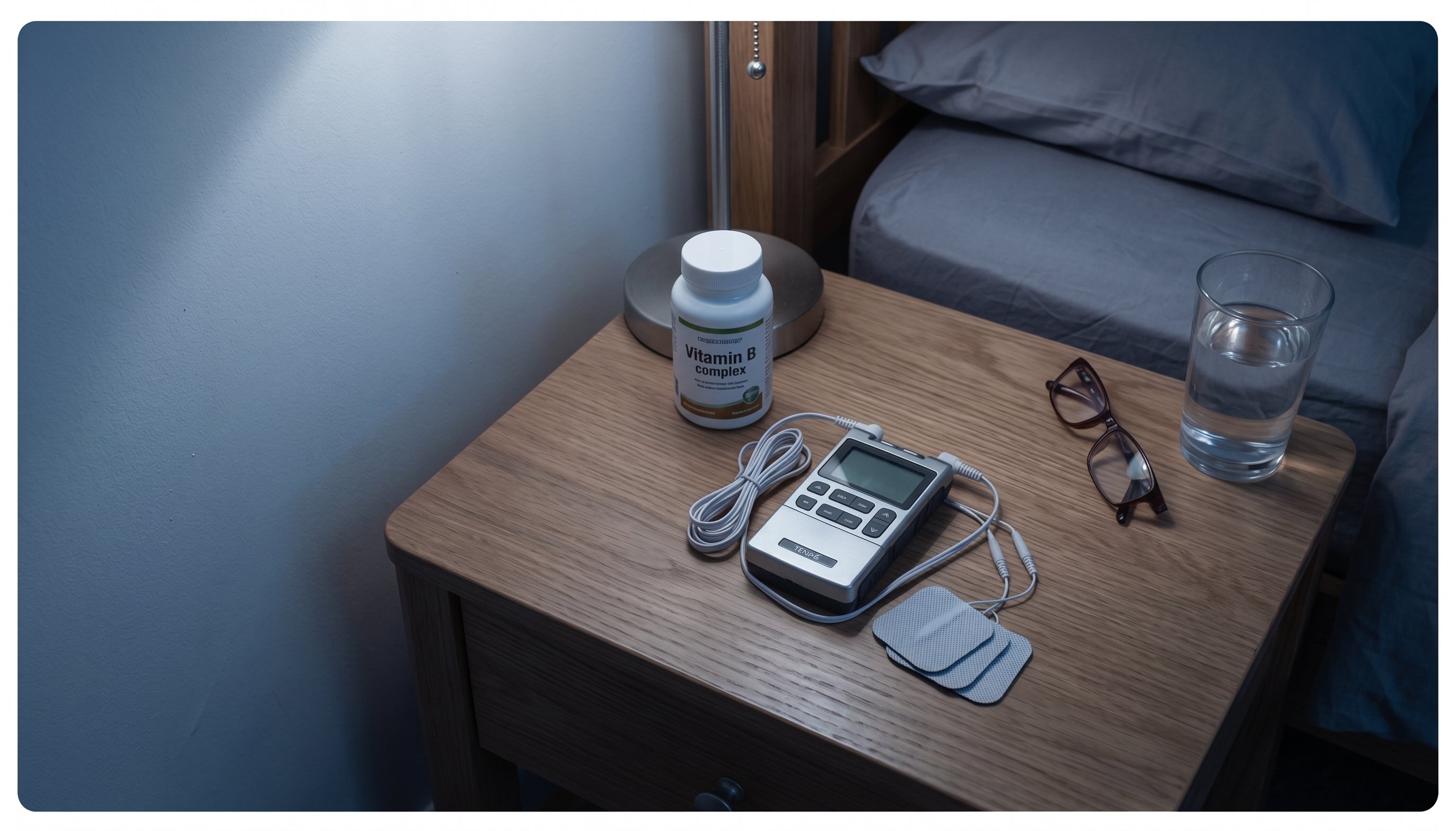
Perhaps you recognize yourself here.
Your doctor prescribed gabapentin. Or pregabalin. They said: "This helps with the pain." And maybe it did—for a few hours. Then the burning sensation returned.
Or they recommended vitamin B supplements. "Great for the nerves," they said. You took them. Every single day. For weeks. For months. Yet the numbness kept spreading regardless.
Or you bought a TENS unit yourself. Electrodes on the skin. Tingling sensations.
Pleasant in the short term. But by the next morning, everything was right back to where it started.
This is not your fault. These approaches don't fail because you did something wrong. They fail because none of them address the real underlying problem.
Pain medications like gabapentin and pregabalin block nerve signals in the brain. They turn down the volume on the alarm system, but the fire in your feet continues to burn.
Dietary supplements deliver micronutrients through the digestive tract. But if the blood vessels in your feet are constricted or blocked, those nutrients can't reach where they are desperately needed. You can pay for the best mail carrier in the world, but if the road is closed, the letter won't arrive. Vitamins simply cannot reach the switch.
TENS devices send weak electrical impulses to the surface of the skin. They block pain signals—just like medication, only electrically rather than chemically.
The German Society of Neurology stated it unequivocally in 2024: For most forms of polyneuropathy, there is no causal drug therapy. Causal therapy means a treatment that addresses the root cause.
None of these three approaches do that.
To understand why the switch is so critical, you first need to understand what is actually happening in your feet. And why it gets worse every night.
When the switch is set to OFF, your nerves are suffocating
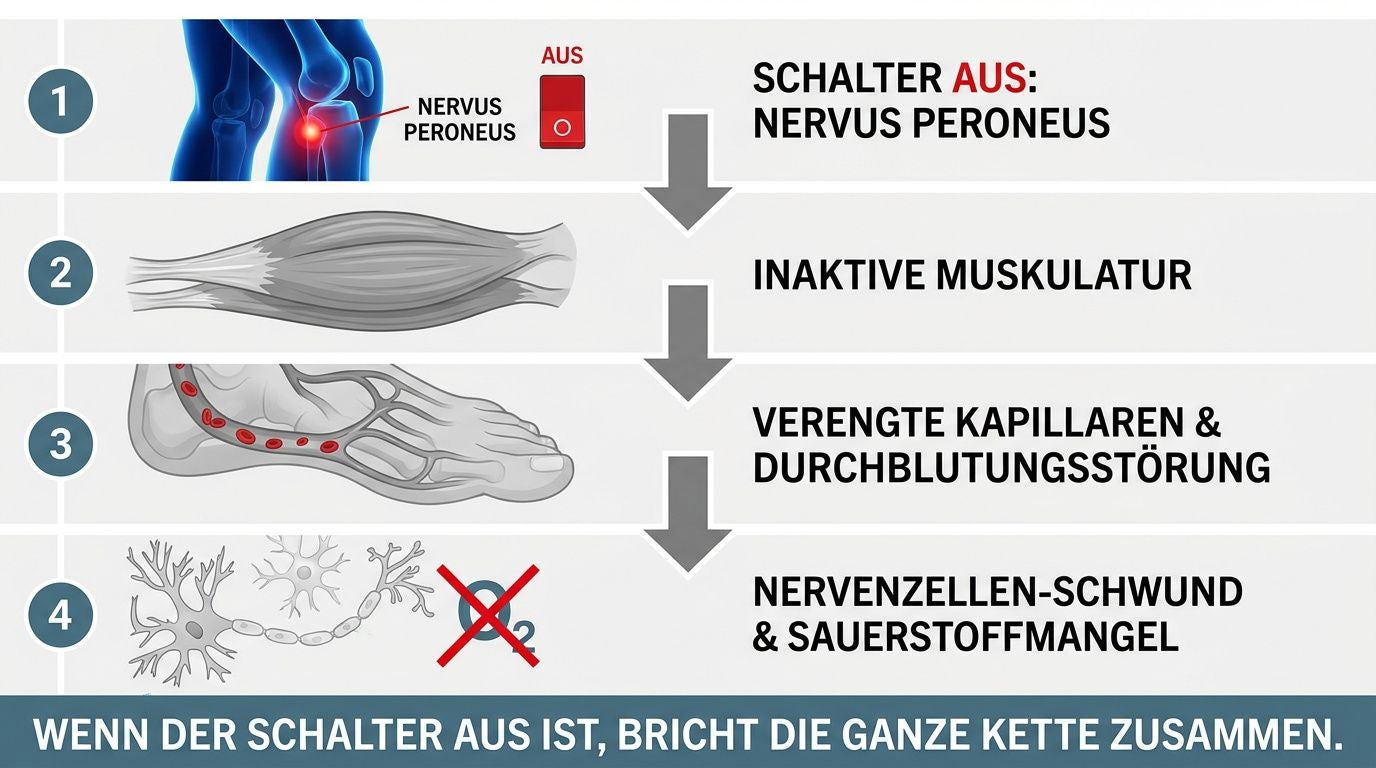
Think of your nerve cells like tiny power plants. Every single one constantly needs oxygen. Without oxygen, the lights go out. Permanently.
That oxygen is delivered by microscopic blood vessels known as capillaries. These capillaries are thinner than a human hair, and they are the Achilles' heel of your nervous system.
That's because these capillaries are not supplied directly by the heart. The heart's pumping power simply doesn't reach that far. The final stretch—from the calf all the way down to the tips of your toes—relies on an entirely different mechanism: the calf muscle pump.
And this pump is controlled by that very nerve located below your knee. The switch.
When the switch is active, your calf muscles contract rhythmically. With each contraction, the blood vessels are compressed. Fresh, oxygen-rich blood is propelled into the capillaries of your feet. The nerve cells receive nourishment. They function. They survive.
When the switch is set to OFF, here is what happens:
Stage 1: The calf muscles contract too infrequently and too weakly. This is driven by a lack of movement, prolonged sitting, and age-related muscle atrophy. The pump operates on reserve power.
Stage 2: Less pumping power translates to reduced blood flow to the feet. Overall blood volume naturally declines with age as the body's water content decreases. The extremities only receive whatever is left over.
Stage 3: In individuals with diabetes, blood vessels undergo further constriction and hardening. The already delicate capillaries narrow even more. Some close off entirely.
Stage 4: The nerve cells in your feet receive less and less oxygen. Clinical data indicates that oxygen levels in peripheral nerve cells can drop by up to 40 percent with age. In diabetics, it can drop by as much as 60 percent.
Stage 5: Deprived of nutrients, the struggling nerves fire off distress signals. The burning. The tingling. The pins and needles that strike at night in bed. These are not malfunctions. They are cries for help from cells that are still alive.
Stage 6: If the oxygen deprivation persists, the nerve cells die off. That is when numbness sets in. And dead nerve cells do not regenerate.
Medical professionals refer to this cascade as the nerve cell suffocation effect. It doesn't begin in the feet.
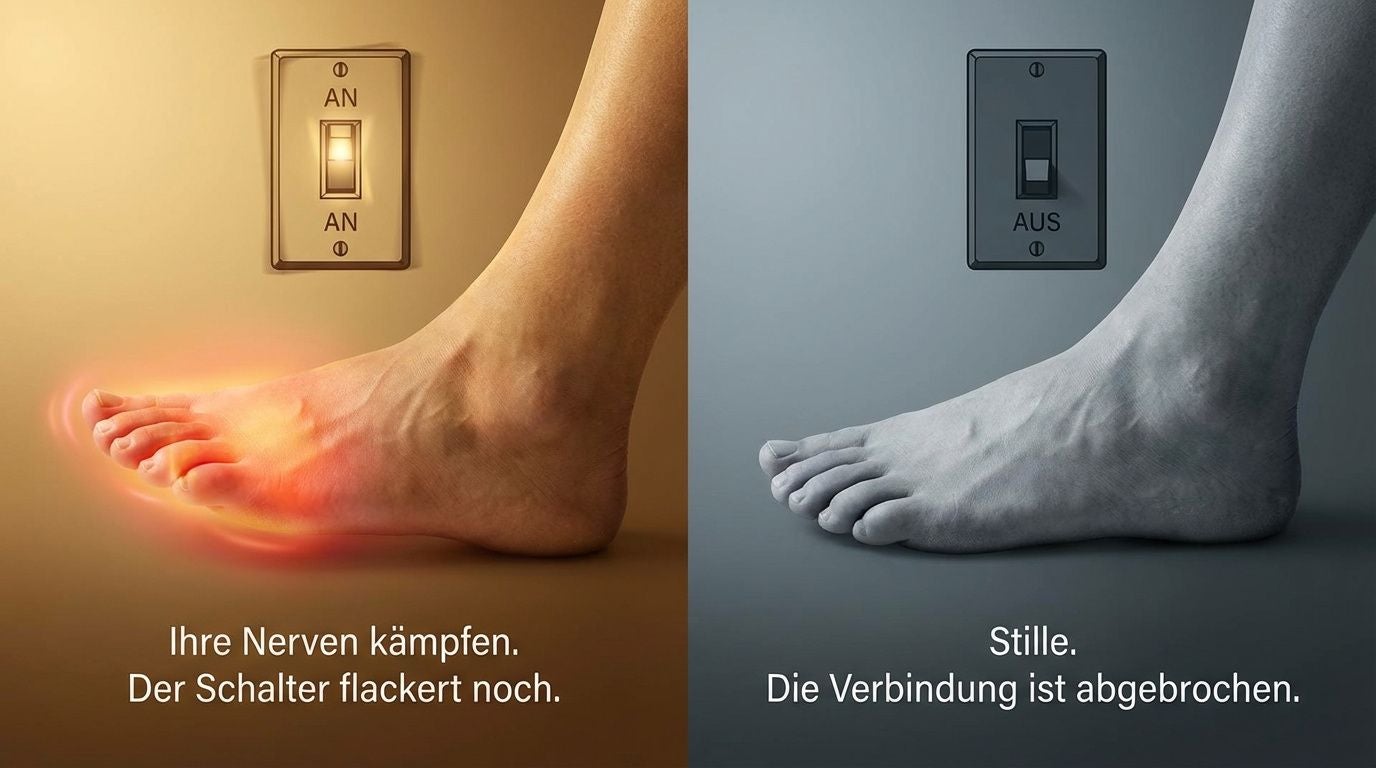
The burning isn't the enemy. It's proof that the switch is still flickering.
Here is the realization that changes everything.
When your feet burn and tingle, it means your nerve cells are alive. They are sending signals. They are crying out for oxygen. But they are still there.
The switch isn't completely OFF. It's flickering. Weakly, intermittently, but it is flickering.
The true danger begins when the flickering stops.
When the burning gives way to complete numbness, it doesn't mean your condition has improved. It means those nerve cells have died. The switch has gone dark for those cells. Irrevocably.
That is why the burning sensation in your feet—as agonizing as it feels—is actually good news. It is proof that the window of opportunity is still open. That the switch is still reachable. That your nerves can still be nourished and restored.
However, that window is closing. Not because of a marketing deadline. Not because of an expiration date. But because of biology. Every day the switch remains unactivated, more nerve cells perish.
The question isn't whether you should take action. The question is: How do you turn this switch back on?
The Nerve Switch: What doctors know—and don't show you
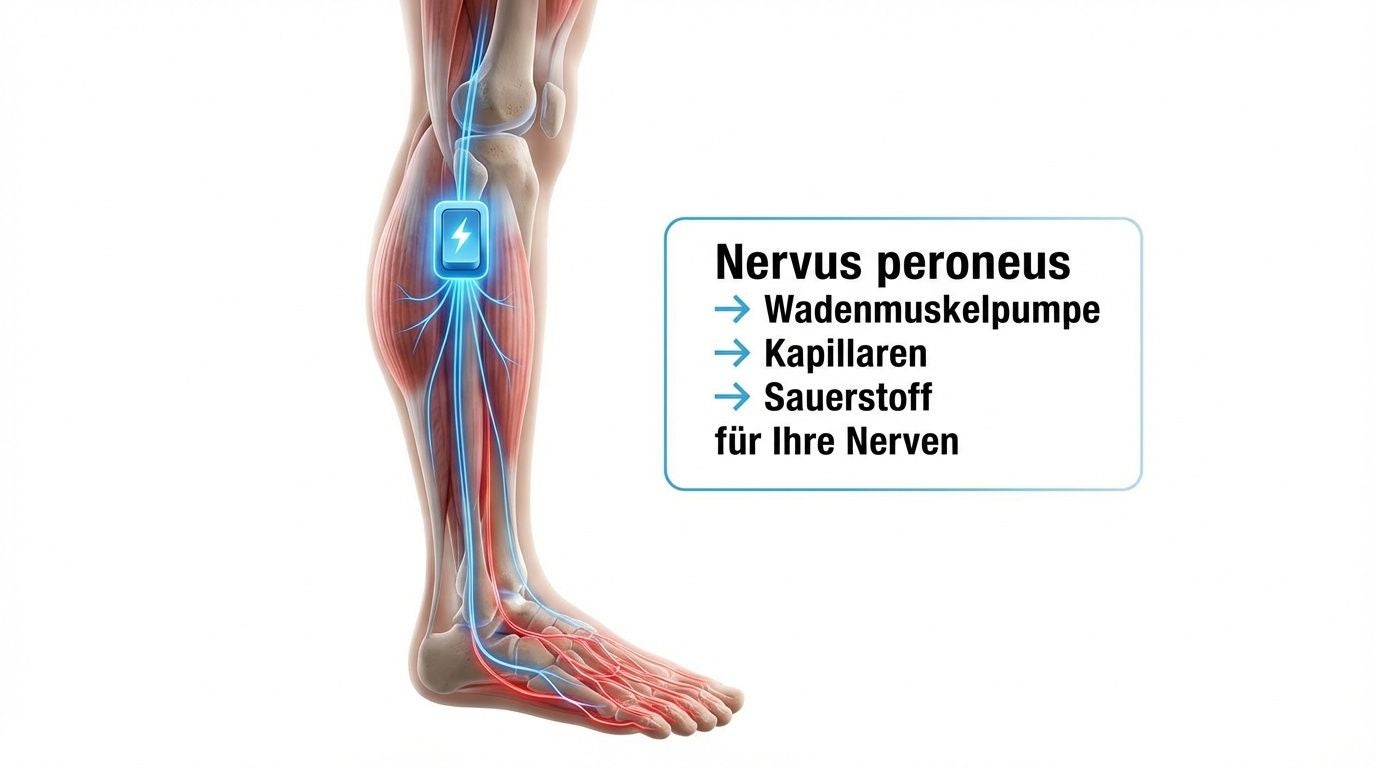
Directly beneath your knee runs a nerve known medically as the common peroneal nerve. Every vascular specialist knows it. Every physical therapist studies it. It appears in every fundamental anatomy textbook.
This nerve controls the musculature of your lower leg—specifically, the calf muscles. And these calf muscles serve a purpose that goes far beyond walking.
Vascular medicine refers to it as the calf muscle pump. It functions essentially as a second heart—engineered specifically for your legs. With each contraction of the calf, the blood vessels in the lower leg are compressed, forcing oxygen-rich blood downward into the smallest capillaries of your toes. The very capillaries responsible for keeping your nerve cells alive.
This mechanism is so vital that clinicians call the calf muscle pump the "peripheral heart." That is no exaggeration. Without this pump, zero oxygen reaches the nerve cells in your feet.
And the peroneal nerve is the master switch that operates this pump.
Why haven't doctors explained this to you?
Not out of ill intent, but because they cannot deliver an in-depth anatomy lecture during an 8-minute consultation. Because prescribing a standard protocol is faster than explaining the dynamics of the calf muscle pump. And because until recently, very few solutions existed to target this switch directly at home.
That has now changed.
Why TENS fails to reach the switch—and what works instead
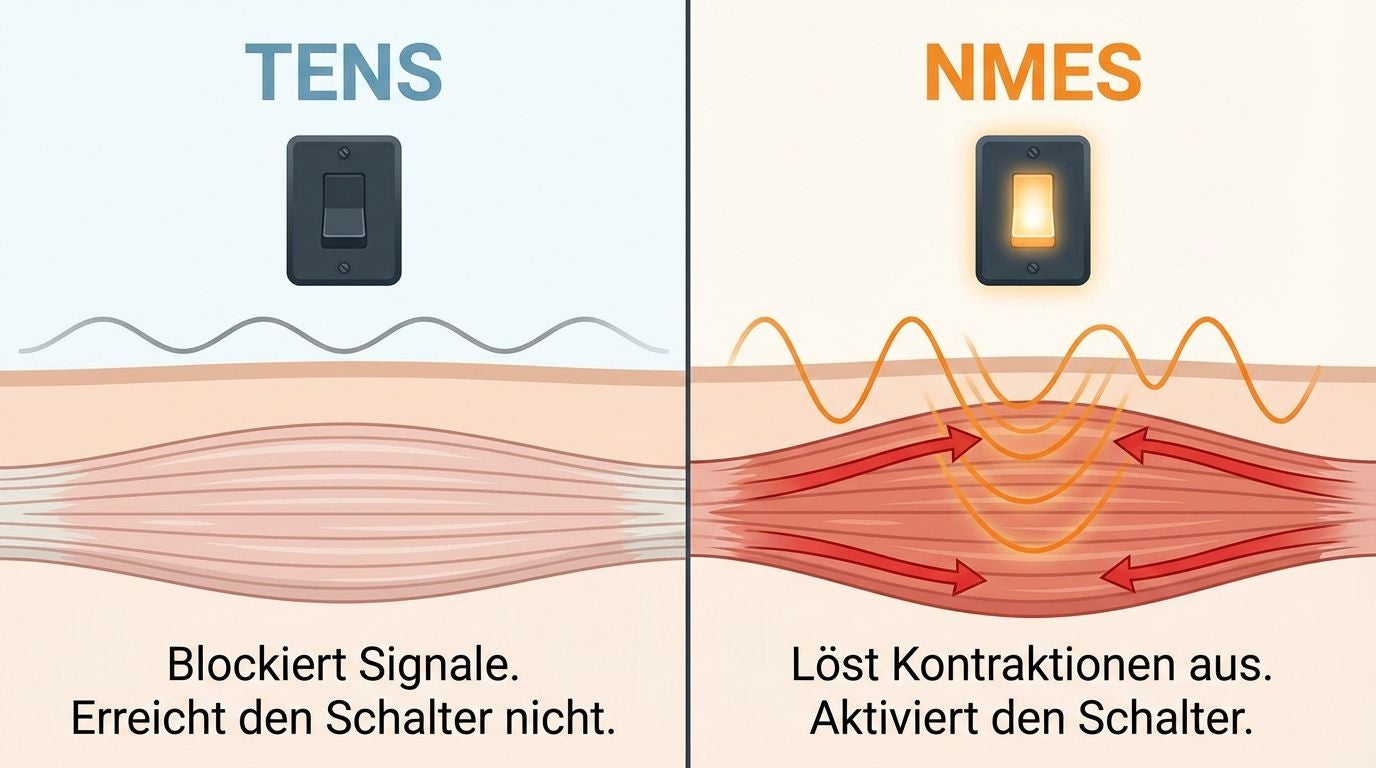
Perhaps you've already tried a TENS device. Millions of people own one; they are inexpensive and widely accessible.
TENS stands for Transcutaneous Electrical Nerve Stimulation. These units send faint electrical pulses across the surface of the skin. Their sole purpose is to block pain signals—working much like gabapentin, only electrically rather than chemically.
The problem remains identical: TENS pulses stay on the surface. They do not penetrate deeply enough into the tissue to activate the underlying musculature. They trigger no real contractions. They pump no blood. They leave the switch untouched.
There is another modality that operates fundamentally differently: At-Home NMES—Neuromuscular Electrical Stimulation.
The distinction is not subtle. It is night and day.
NMES impulses reach deep into the tissue. Rather than stopping at superficial skin nerves, they engage the muscles beneath, triggering genuine muscle contractions. Noticeable, rhythmic contractions—replicating the mechanical pumping of walking without requiring you to stand up.
These contractions physically engage the calf muscle pump. Measurably. With every pulse, oxygen-rich blood is propelled directly into the capillaries of your feet.
At-home NMES reaches the switch. TENS does not.
That is the difference between a device that merely masks signals and one that actively restores circulation.
NMES has been utilized for decades across clinical rehabilitation and sports medicine. Peer-reviewed studies dating back to 2000 demonstrate that targeted electrical stimulation can accelerate axonal regeneration. This is not an unproven fad; it is an established clinical science that is finally available for home use.
NATRAVOR 3D: Three Synergistic Principles. One Goal. Reactivate the Switch.
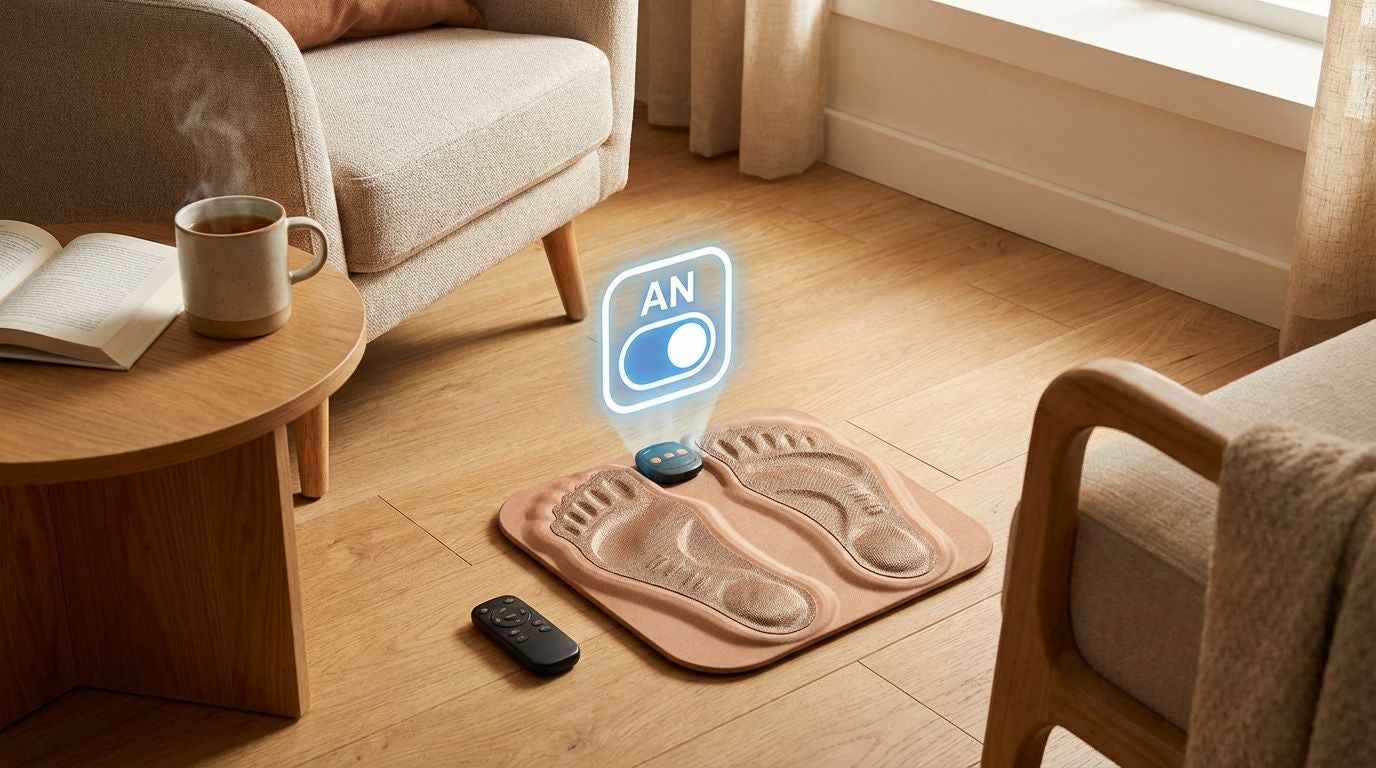
Engineered around these physiological discoveries, this device was created to specifically activate the switch beneath your knee—initiating the entire restorative vascular cascade.
It is called NATRAVOR 3D. The "3D" represents three synergistic principles working in unison at the exact same time.
Principle 1 — At-Home Neuromuscular Stimulation (NMES): Precisely calibrated electrical frequencies stimulate the muscular networks throughout the feet and calves, eliciting rhythmic contractions. These contractions trigger the calf muscle pump, forcing fresh, oxygenated blood deep into your capillaries. The switch is flipped.
The pump is running.
Principle 2 — High-Conductivity Electrode Technology: The stimulation mat integrates an advanced conductive surface designed to achieve deeper tissue penetration. This ensures the stimulation extends beyond superficial nerves to reach deep-seated capillaries and nerve fibers that standard mats leave untouched. The signal arrives exactly where it is needed most.
Principle 3 — Soothing Thermal Activation: Targeted heat naturally dilates the blood vessels. Wider vessels accommodate greater blood volume, and more blood delivers more oxygen. The thermal energy works in perfect harmony with muscle stimulation: while the contractions pump the blood, the heat opens the pathways for it to circulate freely.
These three mechanisms do not operate in isolation; they function simultaneously. That is what sets it apart from ordinary devices that only rely on a single method.
The result: The switch is activated. The calf muscle pump engages. The vessels open. Oxygen-rich blood reaches the capillaries. Your nerve cells receive the nourishment they need to survive.
15 minutes. Your favorite chair. Your remote. That is all it takes.
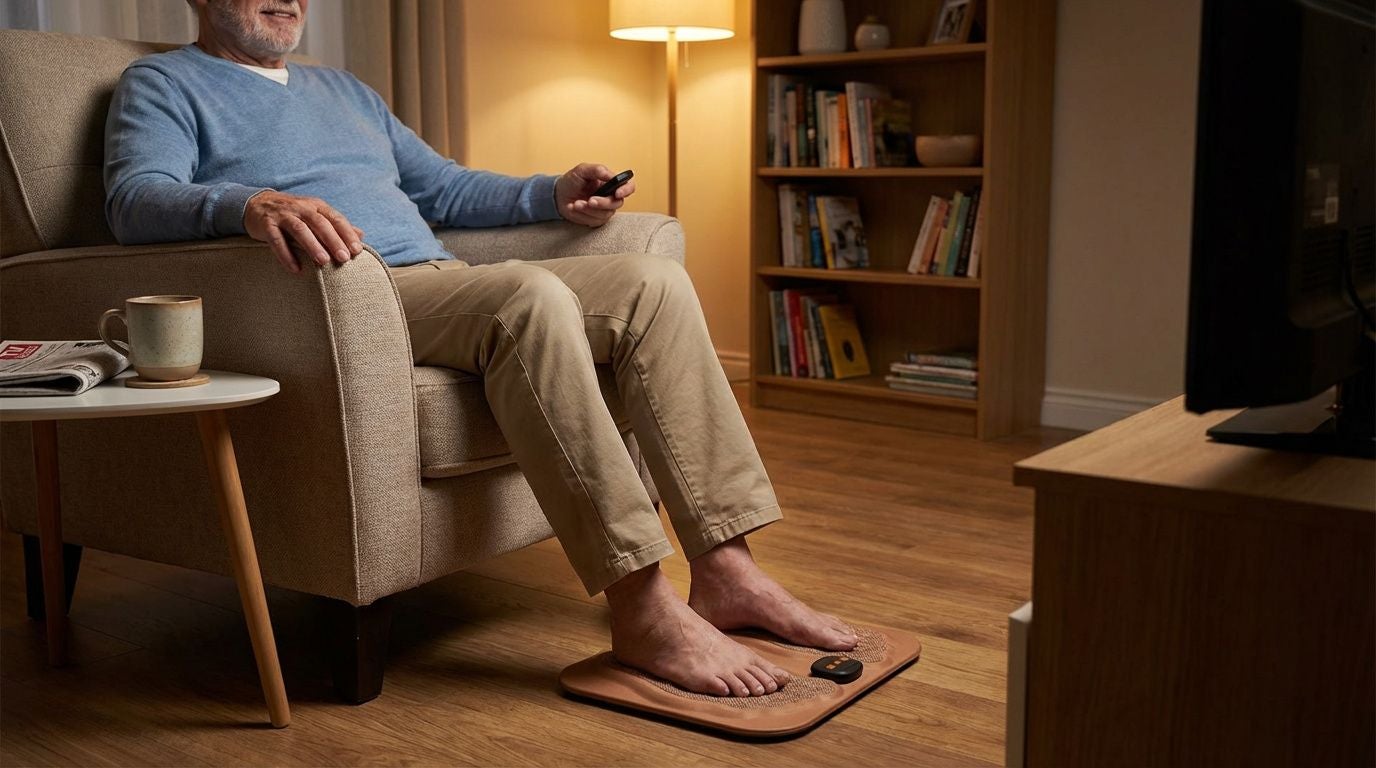
Using the device requires no technical knowledge, no specialist assistance, and zero complicated setup.
Simply place your bare feet onto the stimulation mat. Pick up the wireless remote and select one of the 6 pre-programmed modes tailored to your specific symptoms. Adjust the intensity across 15 customizable levels, ranging from ultra-gentle to deeply invigorating.
Then sit back and relax. Just 15 minutes while reading, watching TV, or resting with your eyes closed.
The ergonomic, square layout ensures both feet maintain optimal contact. The device is entirely USB-rechargeable—meaning no tangled cords, no replacing batteries, and no need to sit next to an outlet.
With the wireless remote in hand, you remain in complete control of mode, intensity, and duration—without ever having to bend down or stand up.
NATRAVOR 3D was developed for individuals who can no longer jog, take long daily walks, or manage stairs without discomfort. It activates the calf muscle pump without requiring your legs to do the heavy lifting.
15 minutes. Put it away. Done.
The switch doesn't take weeks to respond. It reacts immediately.
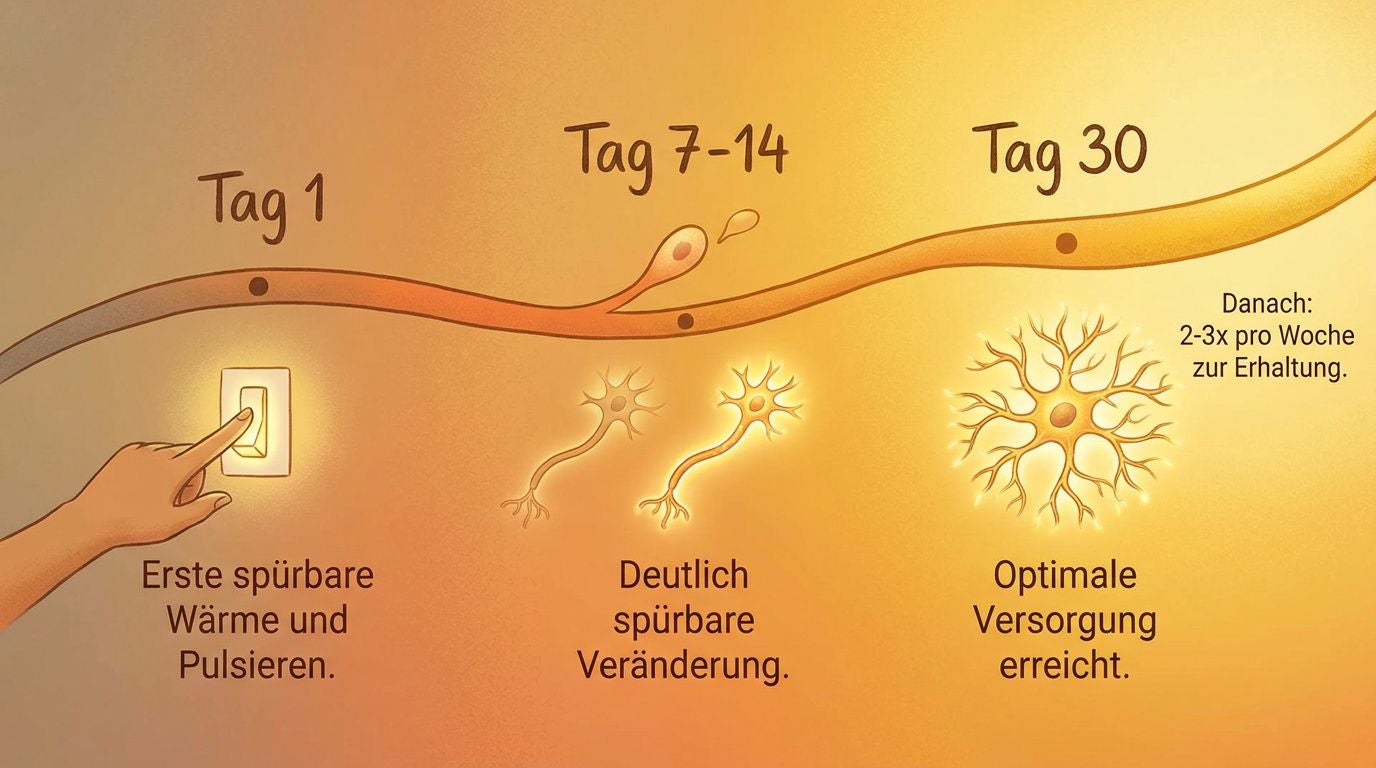
The moment you place your feet on the mat and switch the unit on, you will feel the mechanism engage immediately.
Your muscles contract in a rhythmic, comforting pulse. Gentle warmth begins to spread. You will notice a distinct pulsing sensation through your feet—not an illusion, but the tangible feeling of blood circulating freely again.
Many users report feeling a noticeable shift after their very first session: a lasting sensation of warmth, a subtle easing of the burning ache, and a renewed sense of feeling in toes that previously felt numb.
That is the switch going back to work.
More pronounced improvements typically emerge within 7 to 14 days of consistent daily use as the vascular system adapts to regular stimulation. The capillaries receive continuous blood flow, delivering a dependable supply of oxygen to the nerve cells.
Optimal results are generally observed around the 30-day mark. After that, a simple maintenance routine of 2 to 3 sessions per week is sufficient to keep the switch active.
The cost of activating the switch—versus the cost of leaving it off
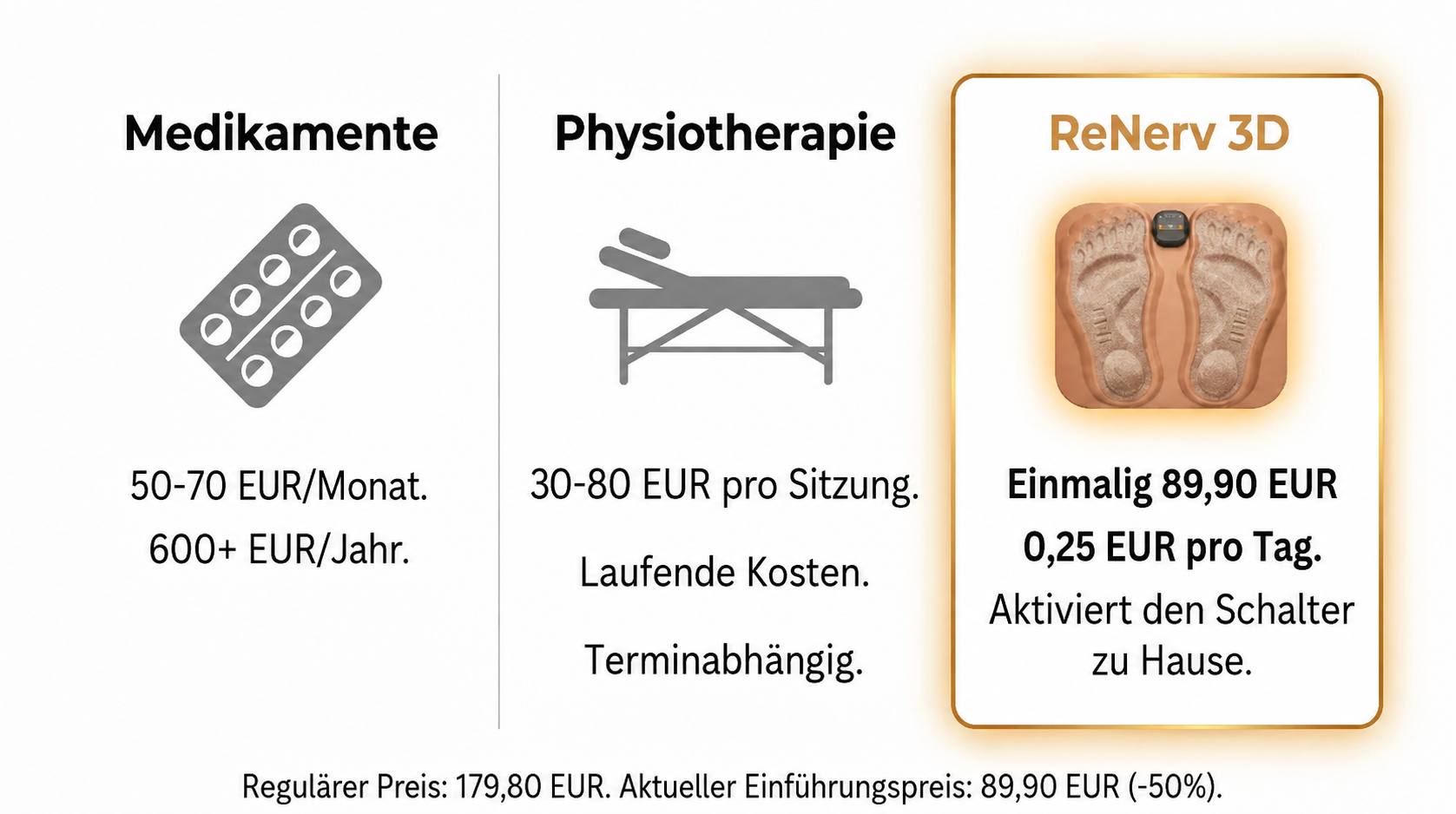
Let's look at the numbers realistically.
The average neuropathy patient spends between $50 and $75 per month on prescription medications—totaling over $600 to $900 every single year.
A single physical therapy session ranges from $35 to $90. Attending the recommended two visits per week adds up to $280 to $720 monthly. Not to mention the hassle of scheduling appointments, driving, waiting rooms, and traveling back home.
NATRAVOR 3D is available for a one-time investment of $89.90. That represents the current introductory special—50% off the regular price of $179.80.
Over the course of a single year, that works out to less than 25 cents per day.
No recurring monthly subscriptions. No prescriptions. No waiting lists. No appointments. The device is yours to keep, ready to use whenever you want, as often as you need.
The NATRAVOR 3D is intentionally priced to bridge the gap between low-grade cheap imports lacking deep penetration and overpriced clinical hardware costing over $350. It delivers professional-grade technology at a price point that requires no second-guessing.
90 Days. Either the switch turns on—or you get your money back.

Making any health-related purchase online demands complete peace of mind—especially if you've already tried options that failed to deliver.
That is why NATRAVOR 3D is backed by an ironclad 90-Day Satisfaction Guarantee. No catches. No fine print.
You have three full months to put the switch to the test. To experience whether your symptoms shift. To see if that nagging burning sensation subsides, whether the numbness begins to recede, and if your feet feel alive again.
If you aren't completely satisfied—for any reason—simply send the unit back. The return process is straightforward and free of hassle. Orders ship quickly from domestic distribution centers, meaning no overseas shipping delays and no complex customs paperwork. No awkward phone calls; a quick email is all it takes.
The only real risk you take is the very real possibility that the switch reactivates and your feet feel healthy and responsive once more.
90 days provides more than enough time to evaluate your progress. Because most users experience marked improvements within 7 to 14 days, you have nearly 80 extra days of reassurance.
Why offer such a generous policy? Because the manufacturer knows the overwhelming majority of people keep their device. Because the underlying biology works. And because a genuinely satisfied customer is worth far more than a forced sale.
Why this switch must be activated now—not next month
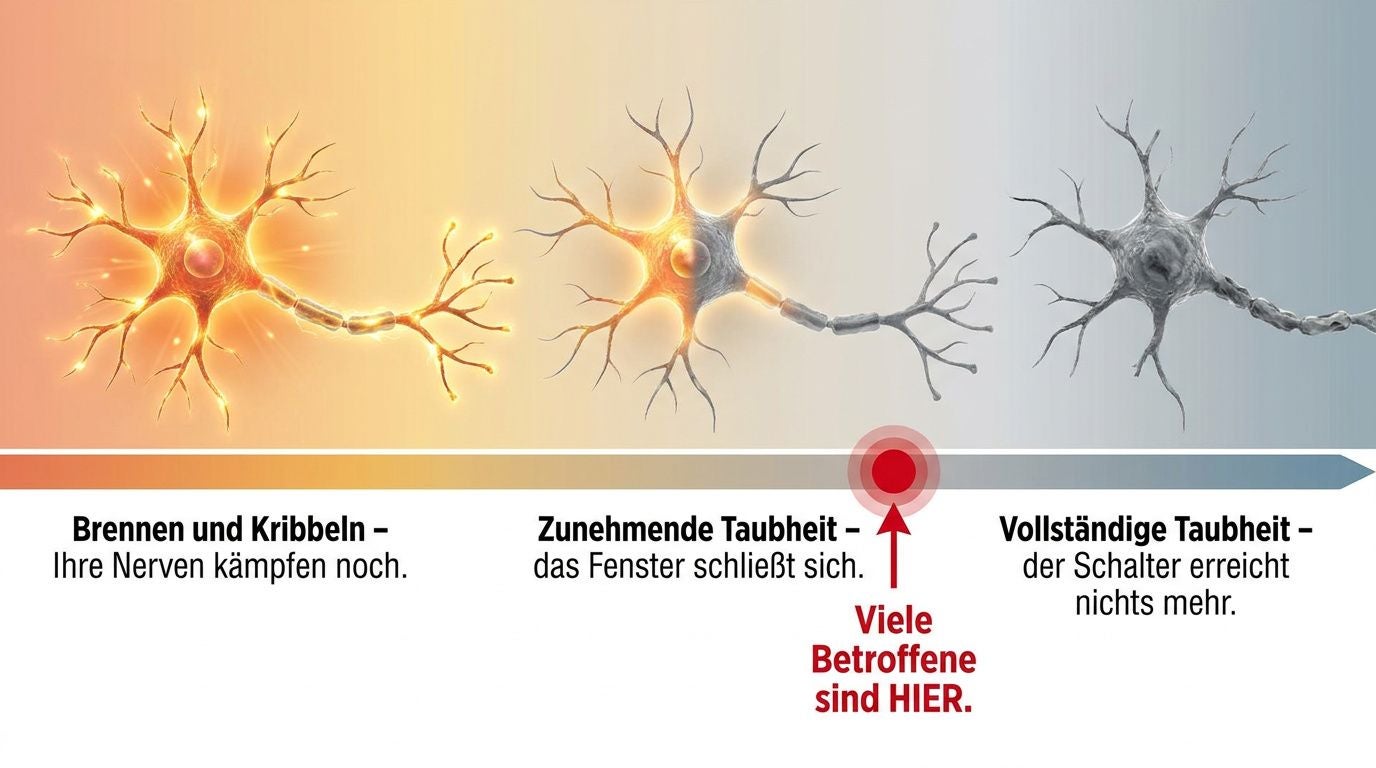
This isn't an artificial countdown timer or a marketing gimmick. It is simple biology.
Recall the fundamental insight shared earlier: that persistent burning and tingling means your nerves are still alive. They are still transmitting signals. They are fighting. The switch can still reach them.
However, that window of opportunity will not stay open indefinitely.
With every day that passes without restoring adequate oxygenation, additional nerve cells degrade and perish. When the burning fades only to be replaced by cold numbness, it is not a sign of healing. It means those nerve cells have shut down permanently. Dead nerve tissue cannot grow back. No switch on earth can revive a dead nerve cell.
That is why the right time isn't "someday down the road." The right time is right now. While your nerves are still firing signals. While the switch can still make a meaningful difference. While the door remains open.
Frequently Asked Questions—Answered Honestly

Is NATRAVOR 3D a medical device?
NATRAVOR 3D is an advanced EMS wellness stimulation device designed for home application. It utilizes proven at-home NMES technology that has been relied upon for decades throughout clinical rehabilitation and sports medicine.
Who should NOT use this device?
Individuals with cardiac pacemakers or implanted electronic devices, those who are pregnant, and individuals diagnosed with epilepsy should not use the unit. If you have any health concerns, always consult your physician prior to use.
Is at-home NMES the same thing as TENS?
No. That is a very common misconception. TENS merely dampens pain signals at the skin level. At-home NMES penetrates deeply into the tissue to activate genuine muscular contractions that physically pump blood through the capillaries. NATRAVOR 3D relies on at-home NMES—not basic TENS.
How quickly will I feel results?
You will experience the comforting muscle contractions and soothing warmth immediately during your very first session. Noticeable relief from discomfort is commonly reported within 7 to 14 days, with optimal benefits unfolding over 30 days of daily routine.
What if it doesn't work for me?
Simply return the device within your 90-day trial period for a full refund. Returns are straightforward and managed through domestic fulfillment centers, ensuring you take on zero financial risk.
Do I have to use it every single day?
During the initial 30-day period, a daily 15-minute session is recommended. Afterward, maintaining results requires only 2 to 3 sessions per week.
Can I adjust the intensity myself?
Yes. The unit features 15 distinct intensity settings and 6 automated modes, all controlled via the compact wireless remote. You can begin on a gentle setting and increase the strength at your own comfort level.
Do I need a doctor's prescription?
No. NATRAVOR 3D is available directly over the counter without a prescription.
Where does it ship from and what is the delivery timeline?
Orders are dispatched from local fulfillment centers via standard carriers. Typical delivery takes only a few business days.
The switch is there. It has been there all along. Now you can activate it.

Let's recap what this report has broken down:
Your nerves are not failing simply due to age, genetics, or circumstance. They are suffocating from chronic oxygen starvation. The tiny capillaries responsible for feeding your nerve cells are failing to deliver sufficient blood and oxygen. That is the root catalyst behind the persistent burning, tingling, and numbness.
Conventional approaches aim for a different target: they mask distress signals, deliver swallowed nutrients that cannot reach blocked pathways, or provide weak surface stimulation. None of them address the master switch.
Yet right below your knee sits the nerve that controls the calf muscle pump—your body's peripheral heart. With every contraction, this pump drives oxygenated blood straight through the capillaries and into your feet, reaching the nerve cells that need it most.
NATRAVOR 3D activates this switch through at-home NMES, deep-penetrating electrode technology, and soothing thermal therapy. Working in unison. 15 minutes a day. Right from the comfort of your favorite armchair.
And you have a full 90 days to evaluate it yourself. Completely risk-free, backed by straightforward domestic returns.
The window is still open. Your nerves are still firing. They are still fighting to recover.
The question isn't whether the switch works. The question is whether you will activate it while it can still make a difference.
This content is for informational purposes only and does not constitute medical advice, diagnosis, treatment, cure, or prevention of any disease. It is not intended as a substitute for professional medical care or prescription therapies provided by a qualified healthcare provider. Always consult your physician before beginning any new wellness or stimulation regimen. If you are pregnant, nursing, taking medications, or under medical supervision, please consult a healthcare professional prior to use.